

Give Meaning to the Meaningful: How to Build Extracurricular Activities That Stand Out to Colleges
Last updated: May 6, 2026
When families ask about meaningful extracurricular activities and what colleges actually want to see, the honest answer is not ‘more.’ It is meaning. Selective admissions officers are reading for depth, commitment, and a coherent story, not a long list of clubs. The students who stand out are the ones who give meaning to the meaningful.
Why Extracurricular Activities Matter More Than Most Families Think
Once students understand the academic expectations (GPA, rigor, course selection), they need to dedicate equal focus to what happens outside the classroom. Extracurricular activities are not “extras.” They are often the clearest evidence of a student’s character, priorities, and trajectory.
And yet, year after year, we meet students midway through junior year who suddenly realize their activities don’t add up to anything. The result is predictable: a frenzy. They join clubs, launch vague initiatives, stack random leadership titles, and try to manufacture involvement in a matter of months.
It rarely works.
Last-minute activities tend to be inauthentic, performative, and thin. They lack depth, commitment, and a real through line. Most importantly, they don’t feel true. And admissions officers can tell.
This is why we teach students to do something different: give meaning to the meaningful and build a life outside the classroom that is authentic, aligned, and verifiable.
Meaningful Beats “Passion”
We often avoid the word passion because it has become overused and misunderstood. Students don’t need a single lifelong obsession at age fifteen. What they do need is something that is:
- Meaningful
- Committed
- Sustained
- Verifiable
These interests don’t appear overnight. They are built over time, with thought and strategy, the way an athlete builds stamina and skill. Students should begin early, experiment, and then stick with what holds their attention, even if it isn’t glamorous.
A meaningful activity doesn’t have to be varsity sports or Model UN. It can be paid work, caring for a sibling, debate, building an online business, theatre tech, tutoring, church leadership, editing the school paper, or learning how to fix engines. The “right” activity is the one your student actually does, and does consistently. The activity needs to be impactful, but it doesn’t need to be on a global scale. It can solve a problem, however small, that shows depth and commitment.
Constructive Struggle: Why Hard Activities Win
A meaningful activity should cost something from the student. Not financially, but internally.
It should involve perseverance, sacrifice, pressure, and growth. It should teach life lessons. It should include both success and failure. In other words, it should contain a little friction.
Many students already face real-life challenges. For the lucky ones who haven’t, they need to choose environments that test them anyway: a demanding job with difficult customers, a coach who gives hard feedback, a newspaper deadline that doesn’t care about their mood, caring for family while juggling school, volunteering in high-stakes service work.
These experiences build fortitude. They develop grit. They shape identity.
This is Constructive Struggle in action, the kind of struggle that doesn’t break a student, but strengthens them. And admissions officers are paying attention to it because it predicts something important: how a student will handle life on campus when no one is holding their hand.
Authentic and Verifiable: Bring Receipts
We shouldn’t have to say this, but we will: don’t lie.
In a post Varsity Blues world, colleges are far more sensitive to embellishment. Students can no longer simply claim an interest. They need to prove it. Not with perfection, but with evidence: coursework, work product, outputs, mentors, experiences, and consistency.
The good news is that proving authenticity has never been easier.
If a student is building something (art, writing, coding projects, research, music, photography, design), they can create a digital footprint. A portfolio is not only for artists. Students can build a simple website or gallery that shows process, progress, and seriousness. Even a curated Instagram account, Substack, or GitHub repository can function as proof.
If a student knits alone in their room and no one ever sees the work, it is the “tree falling in the forest.” Make it visible. Share it thoughtfully. Document it.
And in doing so, students gain side benefits that colleges love: organization, initiative, communication, and the ability to present ideas clearly.
Depth and Alignment: Think Lace, Not Legos
Admissions officers are not looking for a “greatest hits” list of disconnected activities. They are looking for coherence, a story with shape.
We use the word alignment constantly because it’s the difference between a resume and a narrative.
A compelling application is woven like lace: layered, interconnected, nuanced. Not stacked like Legos: random pieces added on because someone said they should.
Coursework, activities, summer experiences, and even part-time jobs should, when possible, reinforce a central theme. Not perfectly, not rigidly, but meaningfully.
An environmental engineering student might take Physics and Calculus, intern with a clean energy startup, and lead a composting initiative at school. A psychology student might take Psych, Bio, Chem, and Stats, volunteer with a mental health organization, and pursue research or training that reflects real engagement.
Personal experience can be the spark. But the spark must be followed by action.
What used to be called a “spike” is better understood as a constellation: multiple points of evidence that shine brighter together.
The Identity Intersection: The Three I’s
To help students move beyond checklists and into intentional narrative-building, we encourage students to find the intersection between:
- Intellectual Curiosities: what topics capture your student’s thoughts
- Initiative: where they step up, build, solve, lead, or try again
- Interests: what captures your student’s heart and imagination
Where these I’s intersect is the student’s narrative space. This is where memorable applications live.
Intellectual Curiosities
This is where students name what genuinely intrigues them: the subjects, questions, books, podcasts, YouTube spirals, problems they can’t stop thinking about. They don’t need a fixed major. They do need evidence that they think beyond the classroom.
Initiative
Initiative is effort plus impact. It is not signing up. It is stepping into discomfort and doing something hard.
It is submitting writing to ten journals and getting rejected nine times. It is emailing every professor in a neuroscience department to ask for a chance to volunteer. It is not getting the prestigious internship and finding another way in anyway, like working at a bike repair shop if you want to be an engineer. (After all, isn’t that how the Wright brothers started?)
Initiative often looks inconvenient. That’s why it stands out.
Interests
This is what students gravitate toward naturally, the unforced, authentic, Saturday-afternoon version of themselves. If a student is too busy to have “free time,” that’s often a story too.
We once worked with a student who, in the middle of applications, felt depleted. When we asked what she missed most, she told us she hadn’t had time to build a miniature brownstone she had been envisioning. We told her to pause the applications and build it, and document the process. A real artist shouldn’t ignore her muse.
Help Your Student Build a Story Admissions Officers Won’t Forget
TCC works one-on-one with students and families to identify the meaningful activities that align with who they actually are, and turn them into a cohesive, verifiable college application.
A-L-L Encompassing Activities
We also use a simple filter when advising students: activities should be A-L-L encompassing.
- A: Aligned with Interests
- L: Longstanding
- L: Leadership Positioned
Aligned
Students don’t need a “perfect” narrative, but they do need to make choices that make sense together.
Longstanding
Longevity signals seriousness. Colleges are far more impressed by a student who builds something over time than one who collects activities late in the game. Sustained involvement allows growth (participant to leader, learner to contributor, curiosity to expertise).
Leadership Positioned
Leadership isn’t just titles. It is ownership. It is making things better. It is seeing a problem and doing something about it, whether that is organizing a cleanup, streamlining a workflow at work, mentoring younger students, launching a project, or building a tool.
Colleges want students who will shape communities, not just join them.
What Brings You Joy?
Here is what families often miss: joy is not separate from strategy.
Brown once asked applicants, “Tell us about something that brings you joy.” That question isn’t fluff. It is admissions signaling a deeper priority: authenticity, emotional insight, and connection.
Joy reveals values. It hints at how a student engages with the world. And it often points to what is truly meaningful, which is exactly what makes an application memorable.
If a student is choosing an activity only because they think it will “look good,” and it has nothing to do with who they are, we say skip it. Time is precious. Spend it on things that bring joy and build resonance with their evolving story.
Specificity: The Interest Within the Interest
One more nuance: colleges aren’t just looking for broad interest (“business,” “engineering,” “biology”). Those categories are starting points, not identities.
We push students to find a specific lens:
- Not “business,” but behavioral economics or sustainable supply chains
- Not “biology,” but environmental toxins and health outcomes
- Not “engineering,” but hands-on tinkering that shows how they learn and build
Specificity doesn’t box a student in. It makes them real. It gives admissions officers something to remember.
Stay in Your Own Lane
Admissions is not a zero-sum game where one student’s acceptance equals another’s rejection. Students often worry that a classmate with similar courses or activities is direct competition.
We encourage them to stop looking sideways.
The goal is not to outshine peers. The goal is to build a narrative no one else can replicate, because no one else has your student’s exact combination of experiences, values, constraints, curiosities, and perspective.
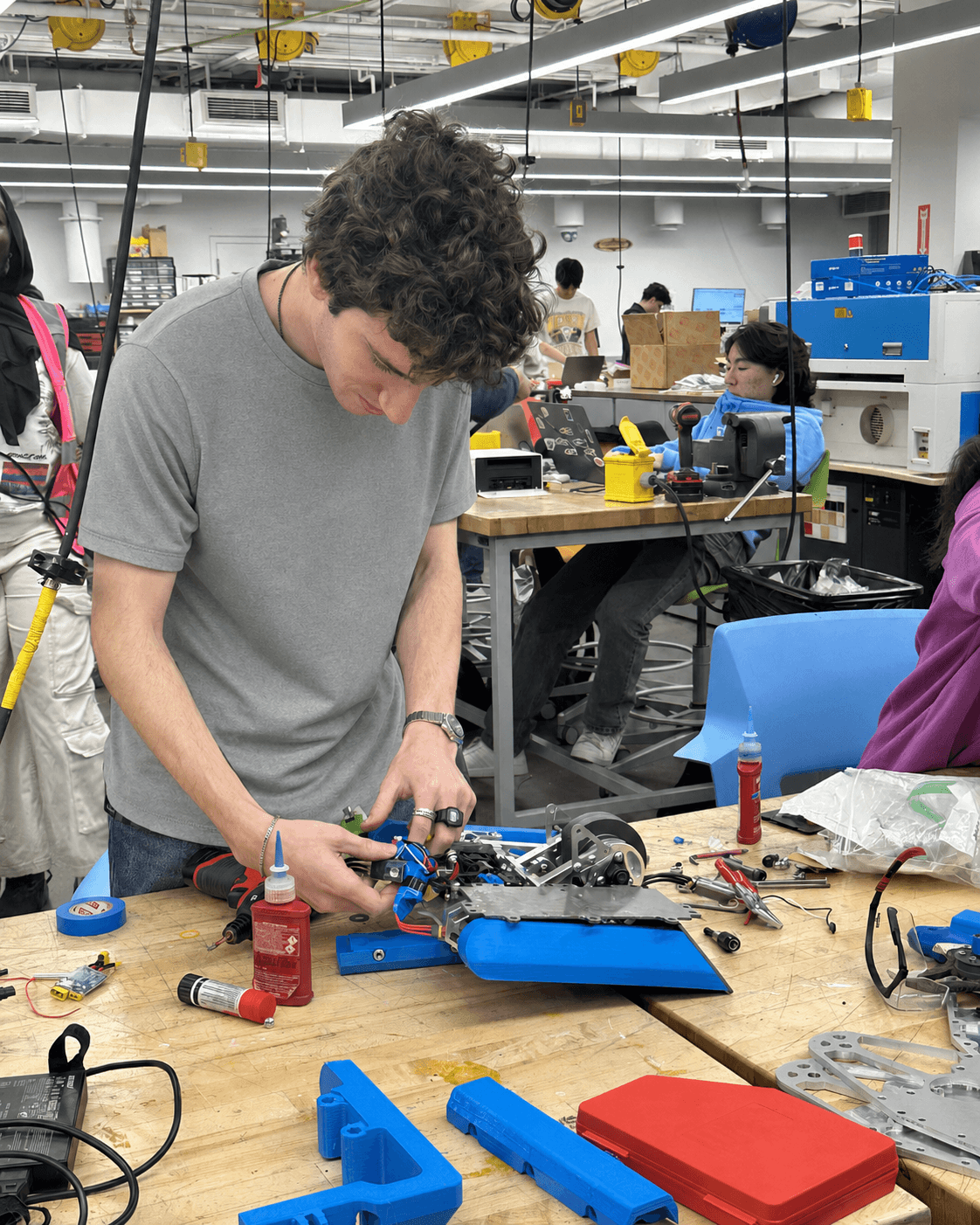
Work jobs. Fix motors. Build a maker portfolio. Pursue EMT training. Document the process. Show proof. Choose challenge. Build a story that is yours.
Because the most powerful activities are not the flashiest ones. They are the ones that cost something internally: time, discipline, sacrifice, and commitment.
Give meaning to the meaningful.
And when those choices are woven together over time, they don’t just create an impressive resume. They create a student who is ready for college, and a story admissions officers won’t forget.
Frequently Asked Questions About Extracurricular Activities for College
What counts as a meaningful extracurricular activity?
A meaningful extracurricular activity is one that is sustained, authentic, and verifiable. It can be a sport, a job, caring for a family member, a creative pursuit, or a hobby pursued seriously over time. What matters is depth and commitment, not category.
How many extracurricular activities should a student have for college applications?
Colleges are far more impressed by a few deep, sustained involvements than a long list of shallow ones. Quality and through line beat quantity every time. Most strong applicants show meaningful engagement in three to five activities over multiple years.
Do colleges care about leadership titles in extracurriculars?
Colleges care about leadership in the broader sense, ownership, initiative, and impact, not just titles. A student who organizes, builds, mentors, or solves a problem demonstrates leadership even without a formal position.
How can a student prove their extracurricular interests are authentic?
Students can prove authenticity through evidence: coursework, portfolios, work product, mentors, public-facing projects, and consistency over time. A simple website, GitHub, Substack, or curated Instagram can document the process.
Work With Us
The College Curators helps students identify the meaningful activities that align with who they are and turn them into a cohesive, authentic application. To learn more, schedule a free consultation.